
Nava Raipur
India's first purpose-built Disaster Recovery as a Service campus. Sited in a quiet, geopolitically neutral location with exceptional grid power quality and availability. Engineered for military-grade resiliency. The first operator in India to offer zero-downtime SLAs as a standard commercial commitment, not a premium add-on.
100 MW DRaaS · Planned
Recovery, built inland.
Why Nava Raipur: geopolitically neutral, strong grid, and the distance from the coastal campuses that recovery needs.
Two halls, one utility spine.
Two data hall buildings on a shared services core, dry coolers on the roof, the gatehouse and parking on the road frontage. The facade is a perforated screen that lets the halls breathe without exposing them, with the HyperNext mark set into the pattern.
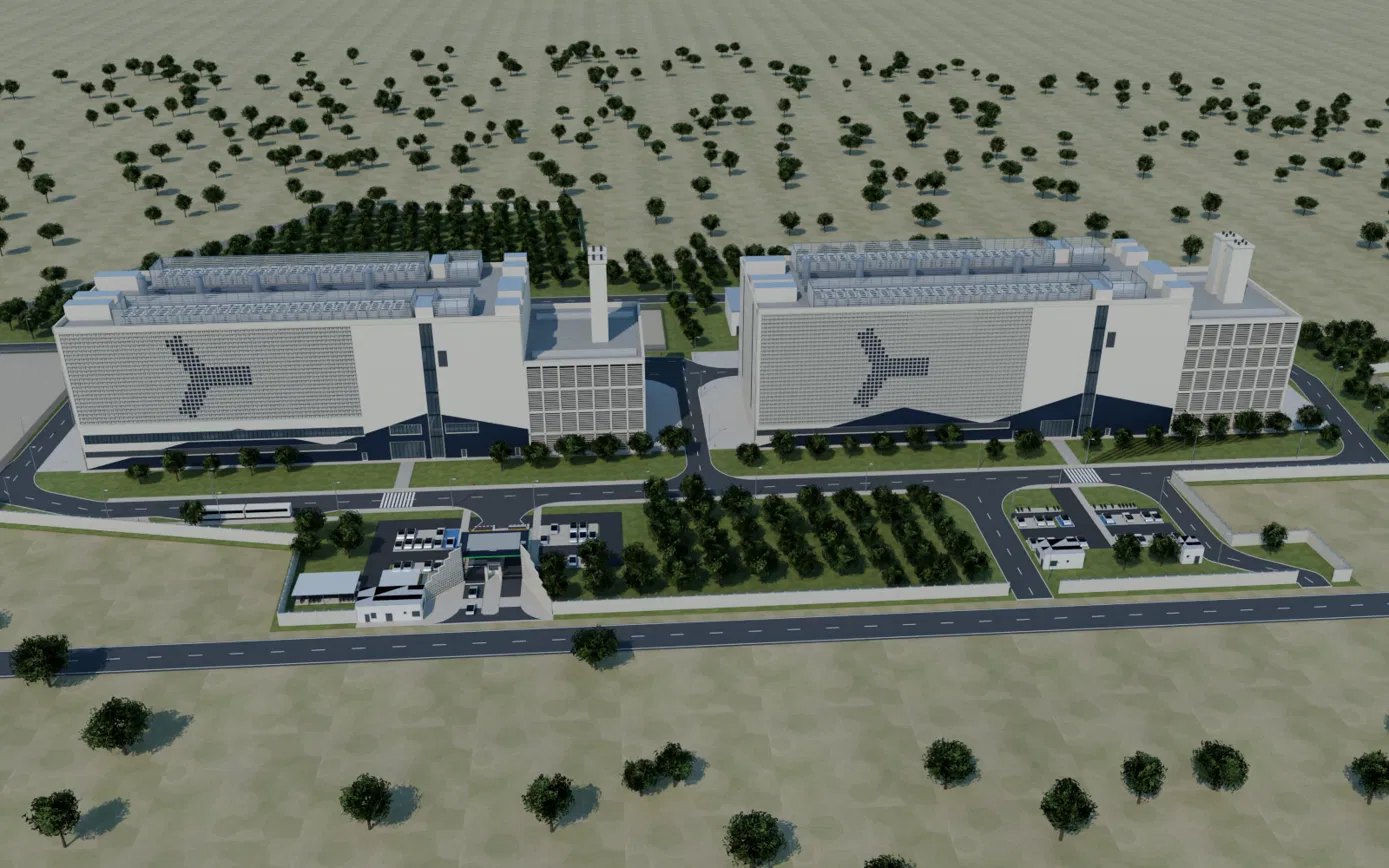
HN-3 Nava Raipur, campus aerial. 100 MW across two halls, the utility block between them.
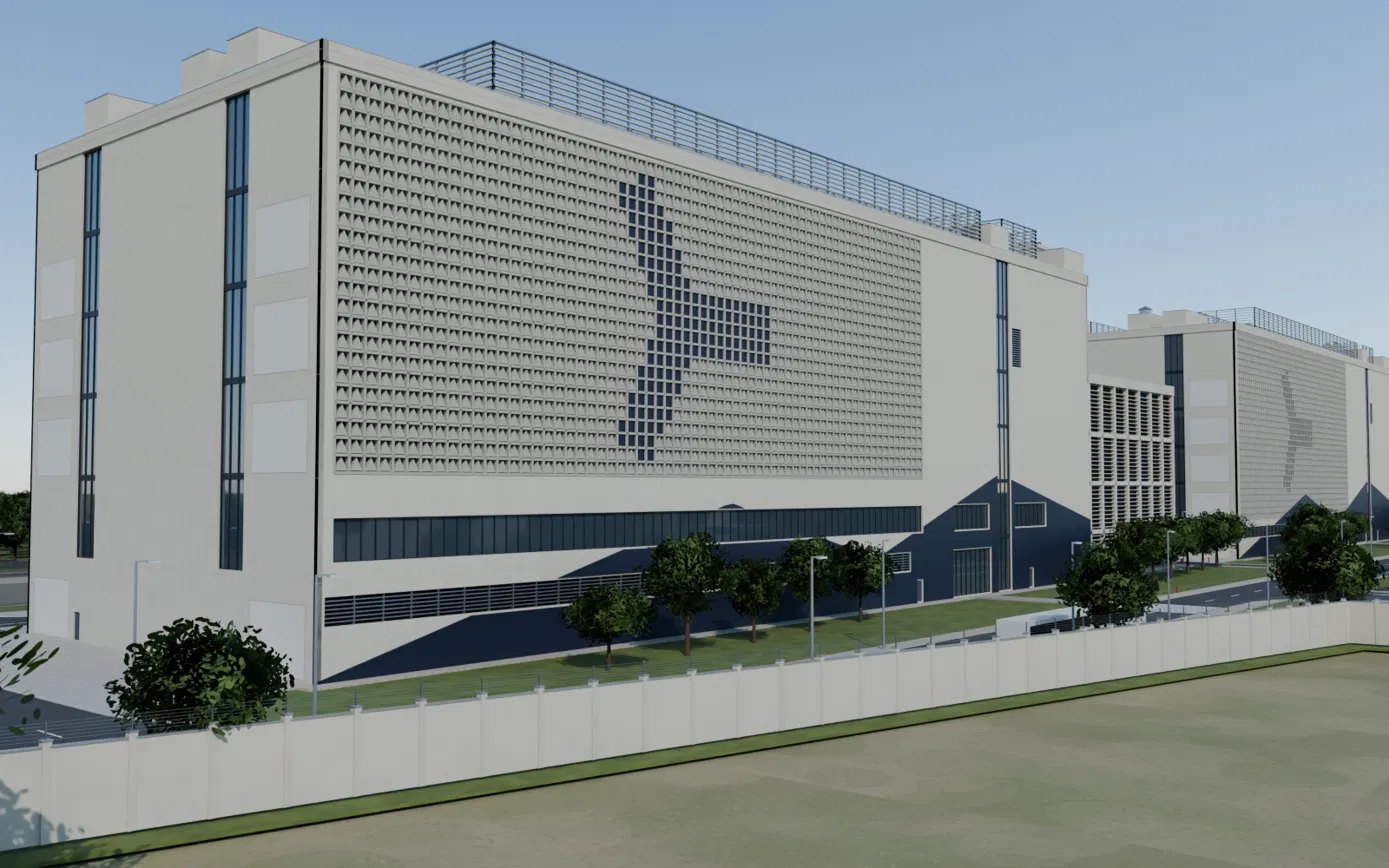
Hall facade from the perimeter road. Perforated screen above, office band and plant entries below.
One architecture,
every campus.
Nava Raipur is built on the same power and cooling design as every other HyperNext site, so a workload moves between them without re-engineering.
800VDC to the rack
Two conversion stages instead of six. Around 95% of the power drawn reaches the chip.
How it works →33 kV MVSST
Medium voltage reaches the rack through one solid-state stage. No traditional transformer in the chain.
The design decisions →Direct-to-chip liquid
A sealed glycol loop with dry coolers. No evaporative make-up water.
The cooling system →2,800 kg/m² floor
Specified for Vera Rubin and AMD rack-scale systems, the highest floor loading in India.
Why it was decided first →Sizing a workload for Nava Raipur?
Tell us the rack count, the density and the date you need it live.